It is a condition in which the atria beat at an abnormally high rate. The cause is the same as that for ventricular fibrillation – chaotic impulses, but in the atria, not ventricles. As the atria and ventricles are separated, except at the AV bundle, fibrillation can occur separately in them. An enlarged atria, which could be due to valve defects or inadequate ventricular emptying, is more prone to fibrillation.
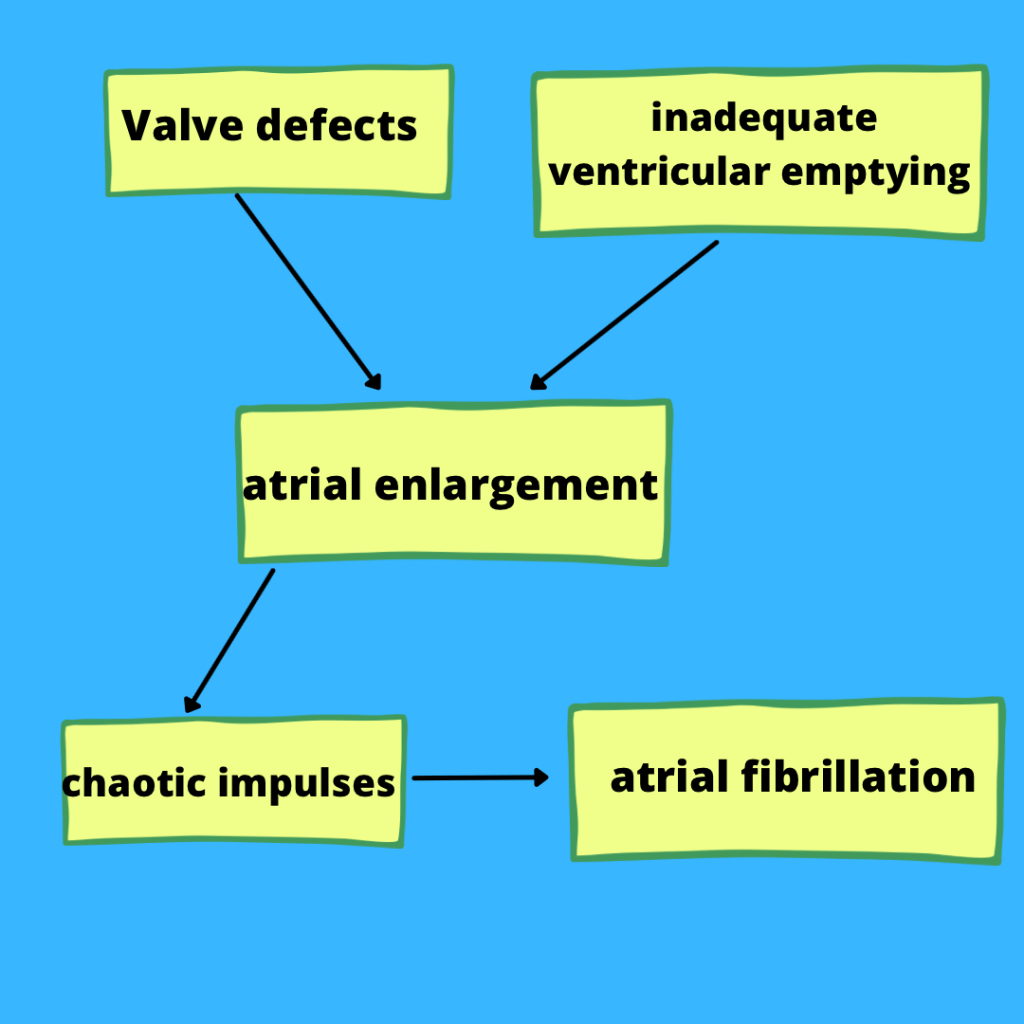
In the cardiac cycle, the atria only act as primer pumps. Thus, even if they don’t contract effectively, the heart is still able to pump enough blood. So atrial fibrillation is not as dangerous as ventricular fibrillation. However, due to the stagnancy of blood in the atria, the chances of blood clots increase in atrial fibrillation; patients are often given anticoagulant medications.
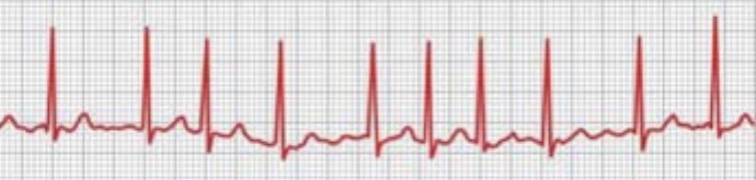
On ECG, the P-waves are often not visible. QRS complexes (which occur due to ventricular depolarisation) are intact though, but the timing of the ventricular beat becomes irregular.
Treatment
A synchronised electroshock (given during the QRS complex) usually corrects the atrial fibrillation.
 Physiology Notes
Leave a comment